


Choosing an engagement ring comes down to two questions: the stone and the setting. Most people spend considerable time thinking about the diamond and almost no time thinking about the setting — until they realize the setting determines how the diamond looks, how it wears, and how easy it is to resize or repair down the road. Here is a plain-language guide to the five most common settings.
Prong Setting
The prong setting is the most classic and most popular engagement ring setting in the world. Metal claws — usually four or six — grip the diamond from the sides, leaving the top and much of the pavilion exposed to light.
Why choose it: Maximum light enters the diamond from all angles, so the stone appears larger and more brilliant than in any other setting. It is also the easiest setting to resize and to clean.
Trade-off: The prongs catch on fabric occasionally and require inspection every few years to ensure they haven't loosened.
Best for: Solitaires, three-stone rings, and any ring where you want the diamond to be the star.
Bezel Setting
A bezel setting encircles the entire perimeter of the diamond with a thin rim of metal, securing it completely.
Why choose it: The most protective setting available — the diamond cannot be chipped on the sides and cannot fall out. It also has a clean, modern aesthetic that reads as distinctly contemporary.
Trade-off: The metal rim blocks light from entering the side of the stone, which can make the diamond appear slightly smaller or less brilliant than in a prong.
Best for: Active lifestyles, hands-on professions, and anyone who wants a sleek, low-profile ring.
Pavé Setting
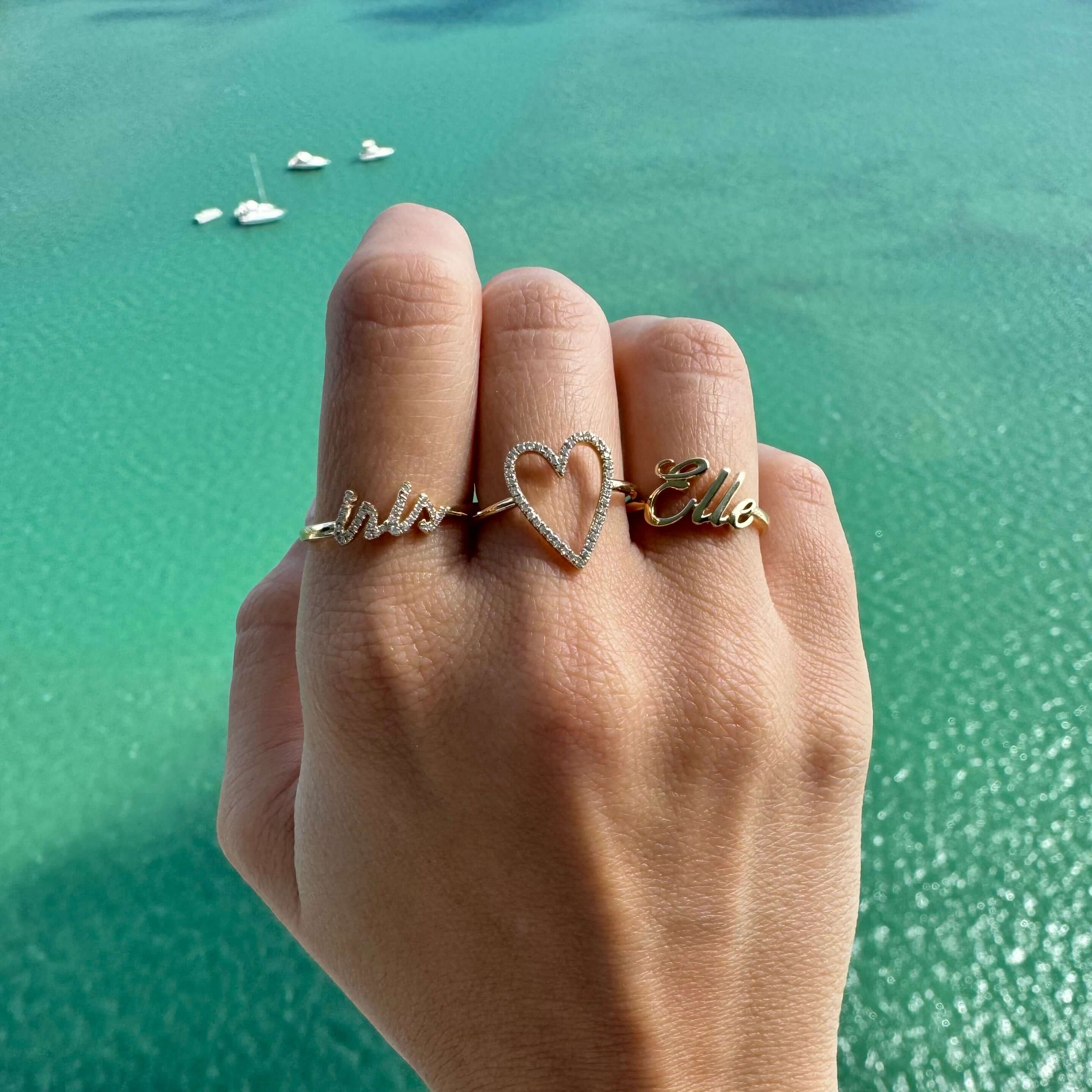
Pavé (from the French for "paved") describes a technique where tiny diamonds are set closely together across the band or halo, held by minimal shared prongs or beads, with almost no metal visible between them.
Why choose it: Creates a field of sparkle across the entire ring surface, not just the center stone. A diamond pavé band dramatically increases the ring's overall presence.
Trade-off: The small stones in a pavé band can loosen over time, especially with heavy wear. Sizing a pavé band can be more complex than sizing a plain band.
Best for: Halo settings, side-stone bands, and anyone who wants maximum sparkle.
Halo Setting
A halo surrounds the center stone with a ring of smaller diamonds, creating a frame that visually enlarges the center stone and adds overall brilliance.
Why choose it: A halo can make a one-carat stone appear closer to 1.4 carats in perceived size. It adds sparkle and presence at a lower price point than simply buying a larger stone.
Trade-off: Halo styles read as more romantic and vintage-leaning; they are not for everyone stylistically. Cleaning requires attention to the small spaces between the center stone and halo diamonds.
Best for: Round and cushion cuts especially; oval cuts in an elongated halo.
Channel Setting
In a channel setting, a row of diamonds is set between two parallel rails of metal with no prongs visible. The diamonds sit flush in the channel.
Why choose it: Very secure — the stones cannot be snagged or knocked loose easily. Creates a clean, continuous line of sparkle.
Trade-off: Difficult to resize without a highly skilled jeweler. Cleaning between the channel and the stones requires care.
Best for: Wedding bands, anniversary rings, and side stones on engagement rings.
How to Choose
Start with lifestyle. If you are very active or work with your hands, lean toward bezel or channel. If you want maximum brilliance and don't mind periodic prong checks, go prong. If you want the largest-looking stone for your budget, consider a halo. If you want a fully modern look, bezel.
Then consider the shape of your diamond. Round brilliants work in every setting. Oval and elongated shapes tend to shine in prong or halo. Emerald and Asscher cuts often look best in minimalist four-prong or bezel settings that let the step facets speak.
Browse Izakov Fine Jewelry's engagement ring collection to see these settings in person — or reach out for a personalized consultation.
 Free insured shipping