


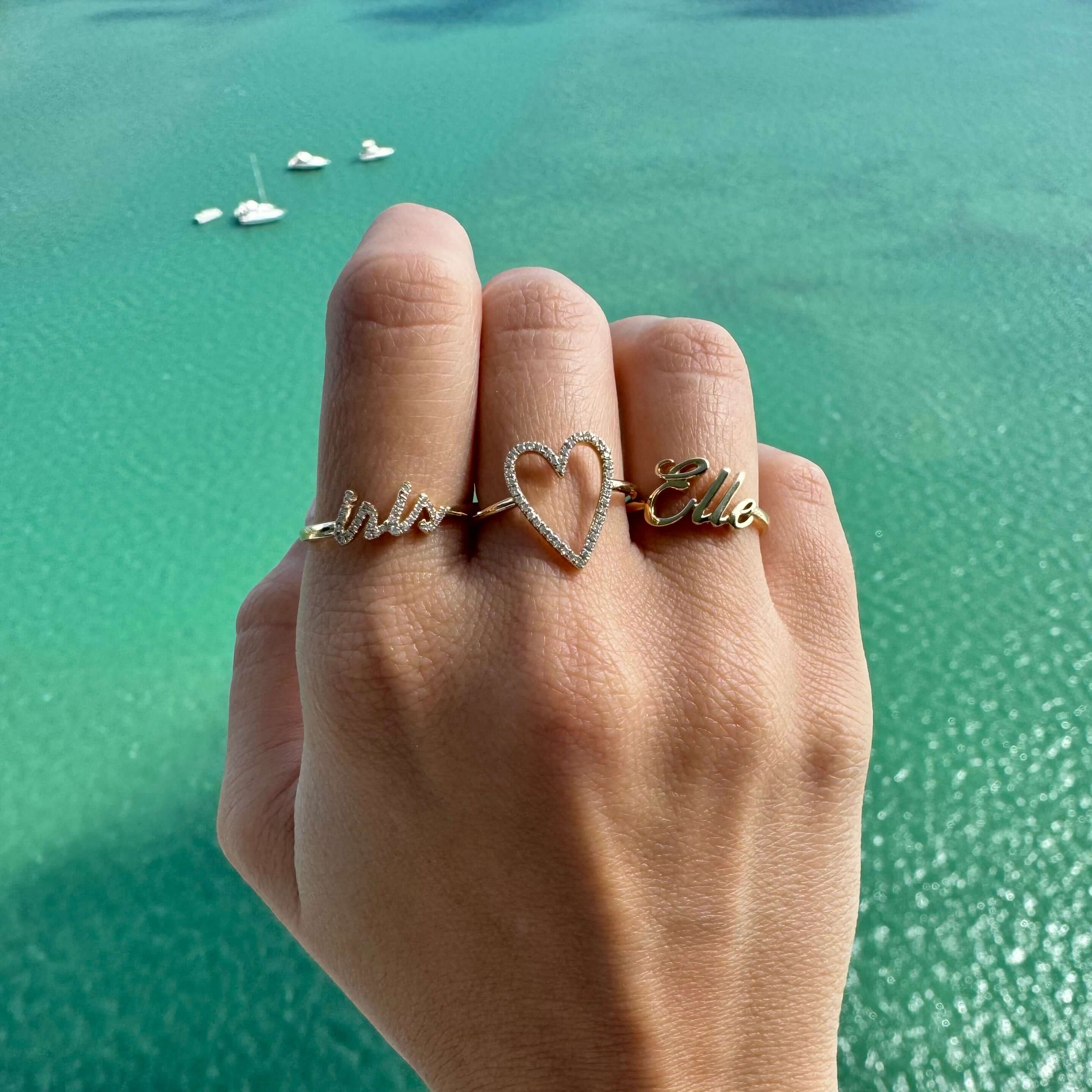
The Art of Stacking Rings
Ring stacking is one of the most versatile expressions of personal style in fine jewelry. A single ring makes a statement; a considered stack tells a story. Whether you are building a casual everyday arrangement or a more formal configuration for a significant occasion, the principles that separate a polished stack from a cluttered one are worth understanding.
Begin with a Focal Ring
Every great stack starts with one ring that serves as its anchor — typically the most visually substantial piece you own. This might be a diamond solitaire, a wide-band signet, or a gemstone ring with presence. Place this ring first and build outward from it. The other rings in your stack should support the focal piece rather than compete with it.
If you are stacking around an engagement ring, treat the engagement ring as the focal point. The bands that flank it — whether plain gold bands, diamond eternity rings, or curved shadow bands — should frame it rather than draw the eye away.
Vary Width and Texture
A stack composed entirely of rings of the same width reads as flat and undifferentiated. Introduce contrast by pairing a wider band with a thin stacking ring, or a faceted or milgrain-edged band with a smooth one. The interplay of width and texture creates depth that photographs well and looks deliberate in person.
Delicate rings — 1 to 2mm bands — work as connective tissue between heavier pieces. They fill space without demanding attention, keeping the eye moving fluidly through the stack rather than stopping at each individual ring.
Metal Consistency Matters
As with necklace layering, metal consistency is important in a ring stack. Mixing yellow gold, white gold, and rose gold in a single stack is possible — some wear mixed metals intentionally — but it requires a unifying element to keep the arrangement from feeling accidental. A shared diamond detail or a repeating motif can serve as that thread. If in doubt, staying within one metal family will always read as more refined.
Which Fingers to Stack
There are no fixed rules about which fingers to stack, but a few practical considerations apply. Stacking on the ring finger makes sense when building around an existing engagement ring or a featured gemstone ring. The index finger is a strong choice for a more deliberate, fashion-forward look. The middle finger offers the most stability for heavier stacks. The pinky is well suited to a single or a pair of slimmer rings.
Consider how the stack on one hand relates to the other. A dense stack on one hand often looks best balanced by a single ring — or nothing — on the other. The asymmetry reads as considered, not incomplete.
Comfort and Wearability
Fine jewelry stacks are meant to be worn, not just admired. Make sure the rings you are stacking are comfortable to wear together for extended periods. High-profile settings or rings with significant pavé detail on the sides can rub against adjacent rings and cause wear over time. If you plan to stack permanently, choose bands with smooth profiles and ask your jeweler about compatibility with your focal ring.
Starting Your Stack
A well-built ring stack begins with pieces worth wearing individually. Explore the ring collection at Izakov Fine Jewelry — fine gold bands, diamond eternity rings, and gemstone pieces designed to layer, stack, and live on the hand beautifully.
 Free insured shipping